The Marketing Leadership Problem
Running a business means juggling endless priorities. Your product needs refinement. Your sales team needs leads. Your operations need streamlining. And somewhere in all this, marketing is supposed to happen.
The problem? Marketing isn’t another task you can delegate to whoever has free time. It requires strategy, coordination, and leadership. Without someone steering the ship, your marketing becomes random tactics that burn money without delivering results.
So you consider hiring a CMO. Then you see the price tag. A qualified Chief Marketing Officer demands $250,000 to $400,000 annually. For most businesses, that’s simply not realistic.
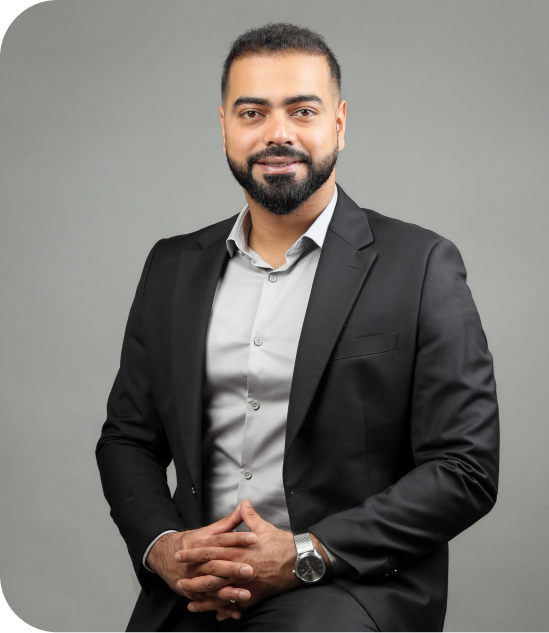
Shahrukh Hussain has spent years helping businesses solve this exact problem. As a fractional CMO working across the UAE, Europe, and North America, he’s proven there’s a better way.
Why Full-Time CMO Hires Are So Risky
The Math Rarely Works Out
Let’s be honest about what happens when you hire a full-time CMO. You find someone with impressive credentials. They talk well in interviews. You make an offer.
Month one, they’re learning your business. Month two, they’re figuring out your market. Month three, they’re developing strategy. Month four, you’re wondering when results will show up. Month six, you’re having uncomfortable performance conversations.
The average CMO stays less than three years. Many don’t make it past eighteen months. Each failed hire costs you roughly a year of progress plus whatever salary you paid them.
Why does this happen so frequently? The traditional employment model sets everyone up for disappointment. The company expects instant transformation. The CMO needs time to understand the business. Both parties grow frustrated.
The Fixed Cost Problem
When you hire someone full-time, you’re committing to massive fixed costs that continue regardless of business performance. If revenue drops, you still owe that salary. If priorities shift, that person still needs work. If you realize six months in that you needed different expertise, you’re stuck.
Shahrukh Hussain regularly meets founders who regret their full-time marketing hires. Not because they hired bad people, but because the rigid employment model didn’t match their business reality.
How Fractional Leadership Solves These Problems
You Get Experience, Not Experiments
With a full-time CMO, you’re often paying someone to learn on your dime. With a fractional CMO who has worked across dozens of companies, you’re buying proven expertise.
Shahrukh has built marketing systems for real estate firms, tech startups, professional services, hospitality brands, and healthcare companies. When he looks at your marketing challenges, he’s usually seen something similar before.
This experience translates to speed. Where an internal hire might take three months to develop a strategy, someone with deep cross-industry experience can deliver a solid plan in three weeks.
The executive marketing advisory approach brings accumulated wisdom to your business without requiring you to hire someone who has worked at ten different companies over twenty years.
Your Costs Match Your Needs
Some months you need intensive marketing support. Other months you need light oversight. Traditional employment can’t accommodate this reality.
During a major product launch, Shahrukh Hussain might dedicate 25 hours weekly to your business. Three months later, with systems running smoothly, that might drop to 8 hours monthly for optimization.
You pay for the value you receive. The 0-1 marketing transformation program provides intensive support during foundation-building, then transitions to lighter ongoing advisory as your systems mature.
The Strategic Advantages You Can’t Get Internally
Honest Feedback Without Politics
Every company develops blind spots. Certain practices become sacred cows. Internal employees struggle to address these head-on because their livelihood depends on maintaining relationships.
External advisors don’t face these constraints. When Shahrukh audits a company’s marketing operations, he identifies what’s working and what isn’t without worrying about politics.
These audits regularly reveal that 30-50% of marketing activities deliver minimal value. Everyone usually knows this. But it takes someone from outside to state it clearly and push for change.
Broader Perspective From Multiple Industries
Your full-time CMO brings experience from a handful of companies at most. Fractional CMOs work across many clients simultaneously. They see what’s working in different markets, industries, and business models.
When designing your go-to-market strategy, this broader perspective matters enormously. The fractional leader might adapt customer onboarding that worked for a SaaS company to your professional services firm.
You’re not just hiring one person’s experience. You’re accessing insights from hundreds of companies and thousands of campaigns.
Building Systems That Run Without Constant Supervision
Moving From Chaos to Clarity
Most businesses operate marketing reactively. Someone gets an idea. The team executes it. Results either materialize or they don’t. Next month, the cycle repeats.
Proper marketing leadership transforms this chaos into systematic growth. It starts with defining what success actually looks like. Not impressions or clicks. Real outcomes tied to revenue and profitability.
With success clearly defined, focus shifts to building repeatable systems. This might mean implementing revenue operations and CRM systems that track every customer interaction.
Shahrukh Hussain sequences improvements so each builds on previous wins. This creates momentum while proving value continuously.
Making Marketing Work With Sales and Operations
The best campaigns mean nothing if your sales team can’t convert the leads. Effective marketing leadership ensures marketing, sales, customer success, and operations all pull in the same direction.
When lead quality issues emerge, the fractional CMO doesn’t just tell marketing to generate better leads. They examine why sales is struggling to close certain prospects. They look at whether the product actually solves the problems marketing claims it solves.
The full-stack marketing team execution approach coordinates across all touchpoints to create experiences that work together seamlessly.
When Fractional Makes The Most Sense
Early Stage Companies: You need sophisticated strategic thinking but can’t justify full-time executive overhead. A fractional CMO has built these foundations dozens of times and knows which mistakes to avoid.
Growing Businesses: You’ve found product-market fit and need to scale customer acquisition systematically. Fractional leadership implements growth and performance strategy that balances acquisition, retention, and expansion.
Established Companies: You’re entering new markets or launching new products. Fractional engagement provides outside perspective plus hands-on support specific to your transition.
Recovering From Failed Hires: The fractional model offers a lower-risk path forward. It rebuilds confidence through quick wins and visible progress.
The Numbers That Make The Decision Easy
Real Cost Comparison
Full-time CMO costs: Base salary ($200K to $350K) plus benefits (25-35%), recruitment fees ($15K to $30K), and equity grants. Total annual cost easily hits $350K to $500K.
Fractional engagement: Monthly retainers typically $5,000 to $15,000. Annual costs might total $60,000 to $180,000 for strategic leadership that would cost three to four times as much if hired full-time. That’s the difference between realistic and impossible for most businesses.
Return On Investment
Fractional CMO engagements often deliver better results than full-time hires because the entire relationship focuses on outcomes rather than activity.
Shahrukh Hussain’s clients regularly report 50-150% improvement in marketing ROI within the first year. This comes from eliminating waste, focusing resources on what works, and building systems that compound effectiveness.
When you spend $120,000 on fractional leadership and generate an extra $500,000 in profitable revenue, the decision becomes obvious.
Getting Started The Right Way
What The First 90 Days Look Like
Fractional CMO engagements begin with comprehensive assessment. This means auditing current marketing to understand what’s working, what isn’t, and where resources are being wasted. With assessment complete, focus shifts to strategic private consultation that defines priorities and builds the roadmap. Implementation proceeds systematically. Quick wins build confidence. Foundation systems get established before optimization begins.
Timeline Expectations
First 30 days: Diagnostic work, initial strategy, and quick wins.
Months 2-4: Core systems get built or optimized.
Months 4-6: Foundational work shows measurable business impact. Lead quality improves. Conversion rates increase.
After 6 months: Focus shifts to continuous optimization and scaling.
Why This Model Represents The Future
Companies increasingly recognize that traditional full-time employment models don’t match modern business realities. Marketing complexity requires broader expertise than one person possesses. Technology evolution happens too fast. Economic pressure demands demonstrable ROI.
Shahrukh Hussain works with forward-thinking leaders who understand that strategic marketing guidance shouldn’t require full-time employment overhead. They prioritize flexibility, expertise, and results.
Early adopters gain years of advantage. They build sophisticated marketing systems faster. They avoid common mistakes. They achieve better results with leaner budgets.
Your marketing function deserves leadership that drives real results, builds sustainable systems, and positions your brand for long-term success. The question is whether you’ll pursue that through expensive full-time hires or strategic fractional engagement that delivers experienced leadership at a fraction of the cost.
Ready to transform your marketing leadership? Shahrukh Hussain provides fractional CMO services to businesses across the UAE, Europe, and North America. His approach combines strategic thinking, systematic execution, and measurable results. Explore his executive marketing advisory services to discover how fractional leadership can accelerate your growth while keeping costs manageable.